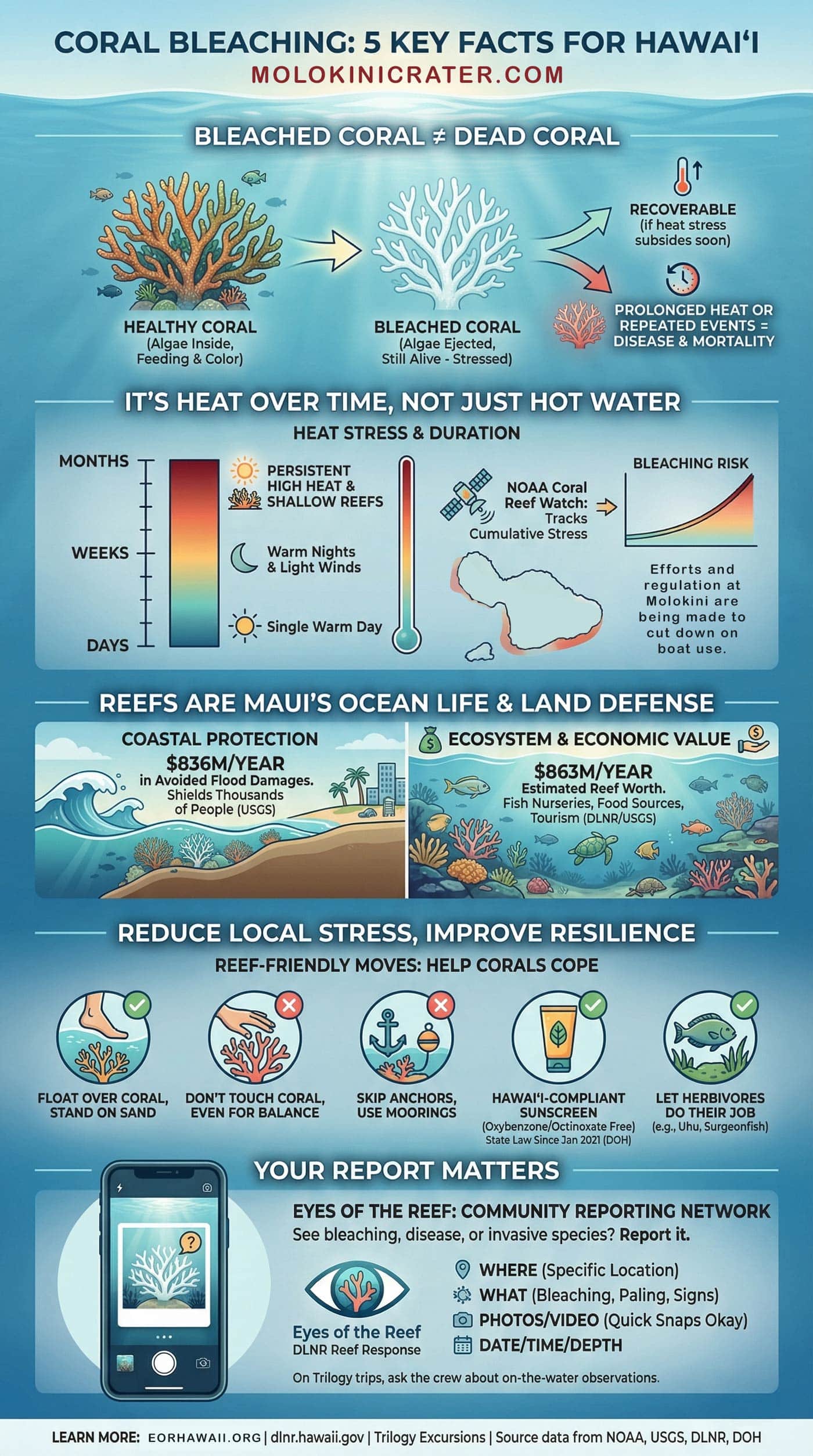
Guest post by Kelly Montenero with Trilogy Excursions, refreshed with current Hawaiʻi and Maui reef info.
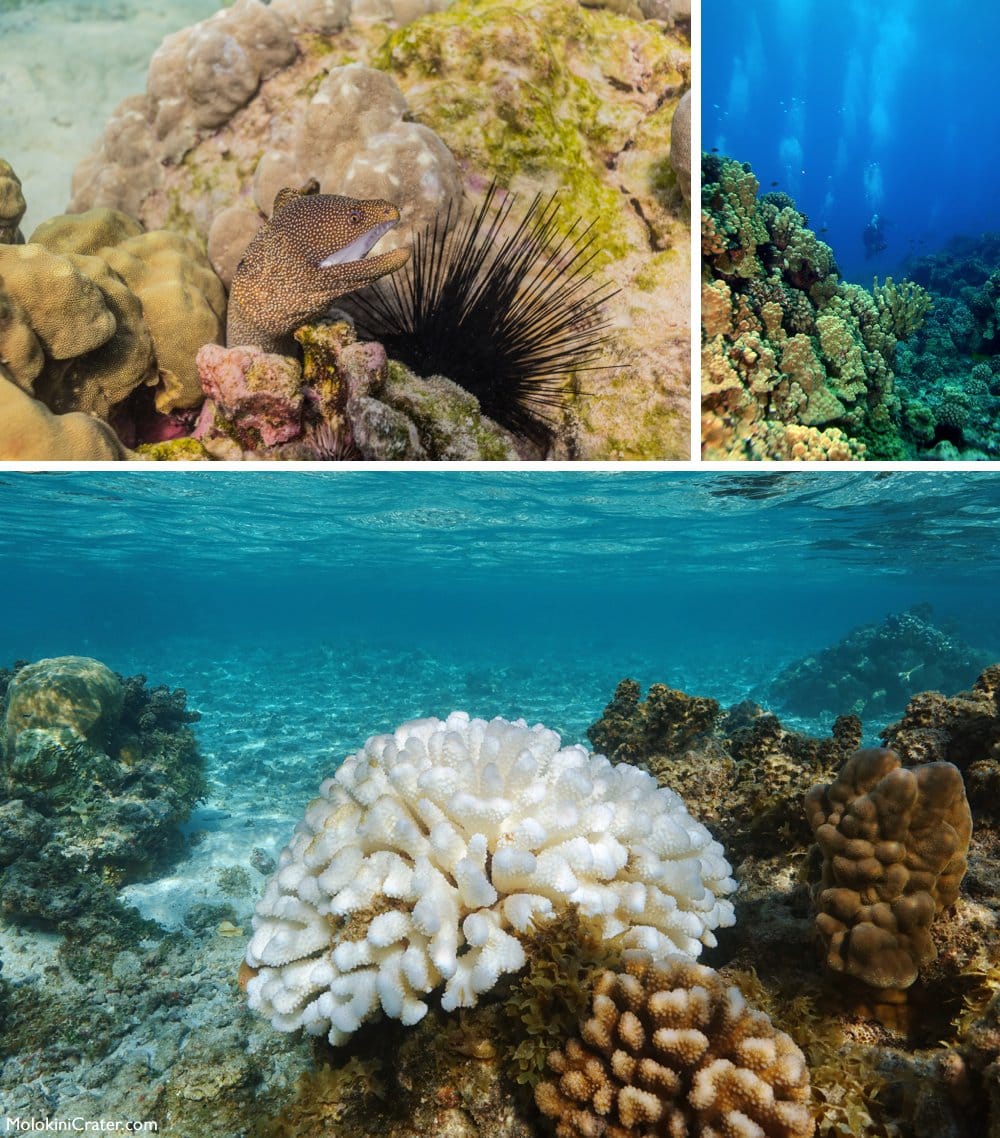
Maui still has plenty of jaw-dropping snorkeling days, but the reefs have been taking repeated hits from warm-water stress. Big bleaching years in Hawaiʻi have stacked up since the mid-2010s, and that “snow-white coral” look is one of the clearest signs the reef is having a hard time.
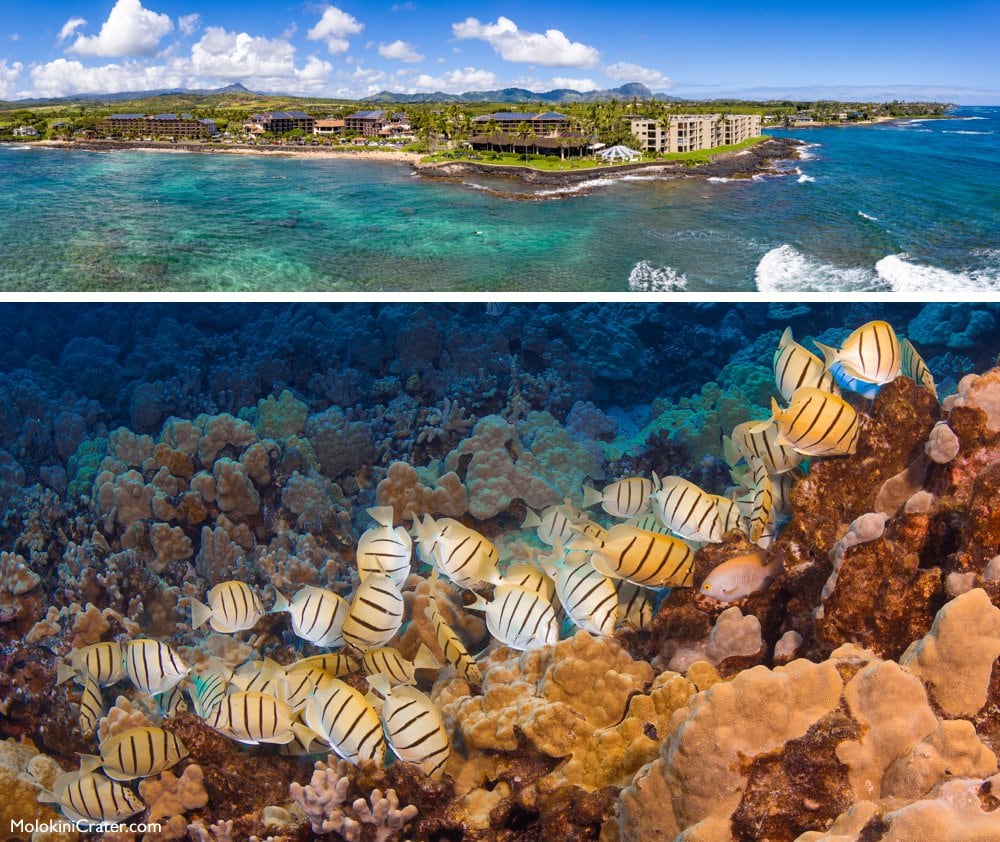

#1 Bleached coral is still alive, it’s just running on empty
Bleaching is what happens when coral gets so stressed that it boots out the tiny algae living in its tissues. Those algae are not just roommates, they’re the coral’s main food source (and a big reason the reef has so much color).
If the water cools down soon enough, the algae can move back in and the coral can recover. If the heat hangs around, or bleaching keeps repeating, the coral can weaken, get sick, and die.
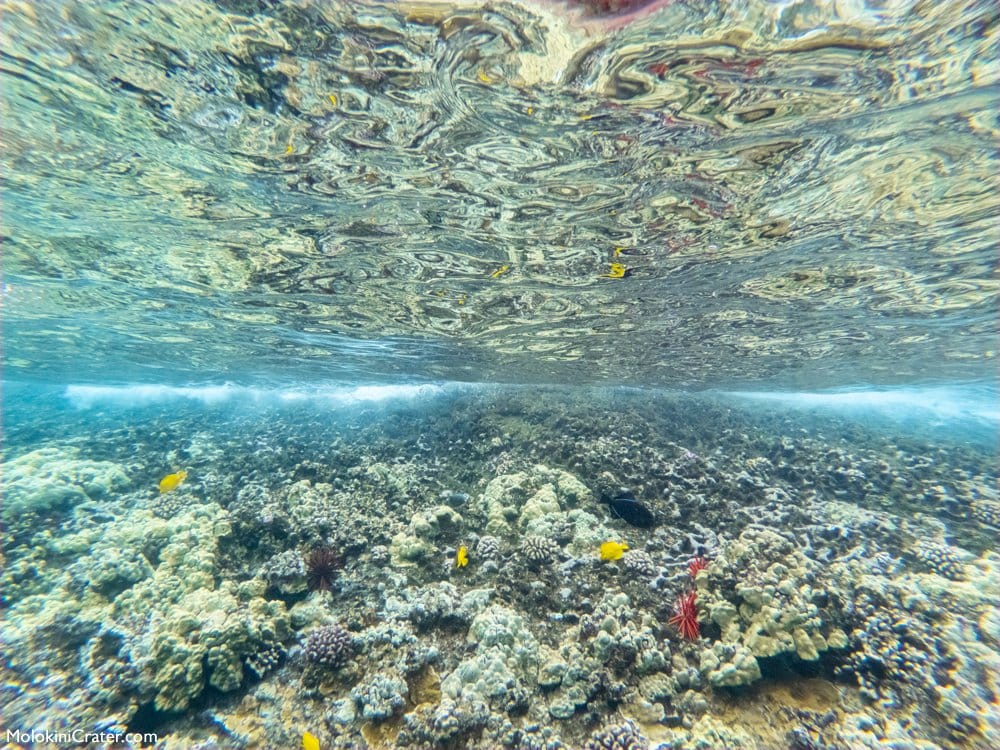
#2 It’s not “hot water” once, it’s extra heat that won’t quit
Corals can handle normal seasonal swings. The real trouble starts when the ocean stays warmer than usual for long stretches, especially in shallow, sunny areas where daytime heating adds another punch.
For Hawaiian corals, bleaching risk often shows up around about 28°C, and during bad events parts of the reef can see temperatures closer to 30°C. It’s not a magic number that flips a switch, it’s the combination of temperature plus time.
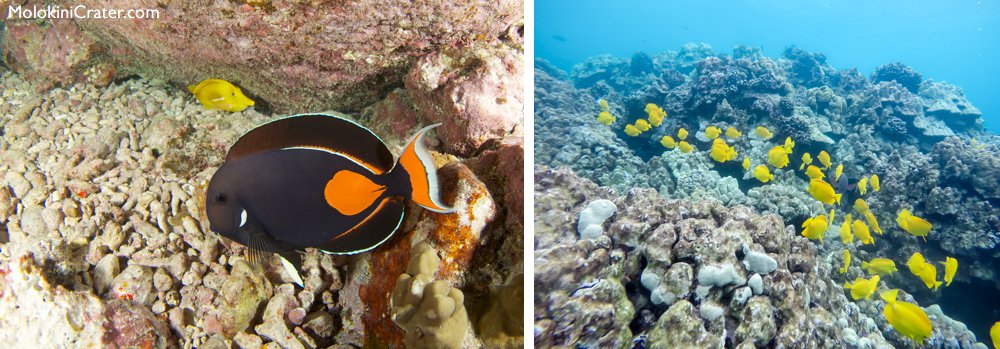
A good way to picture it: one scorching day is annoying, a long heatwave is where the damage piles up.
#3 Bleaching can be wildly uneven, even within Maui Nui
One reason bleaching confuses snorkelers is how patchy it can be. Two reefs on the same island can look totally different in the same month.
A clear example from the 2019 event: surveys at Molokini found roughly 50% of Montipora capitata (rice coral) bleaching or paling heavily, while parts of the South Maui shoreline checked around that time (Makena, Wailea, Kīhei) were reported at under 10%. Same general region, very different outcome. That said, the break in tourism during COVID and regulations reducing boat since then shows visible comeback to the reefs (as seen in this video from 3 years ago.)
#4 Reefs are more than pretty, they’re shoreline protection with a price tag
Coral reefs are fish habitat, snorkel magnets, and the reason the ocean feels alive in so many bays, but they also function like a natural seawall.
In Hawaiʻi, reef protection has been modeled at about $836 million per year in avoided flood damages (property and economic activity). Another statewide estimate puts the overall annual value of Hawaiʻi’s coral reefs at around $863 million per year.
That’s a fancy way of saying, healthy reefs help keep water where it belongs, and they keep a lot of people employed.
#5 Small choices in the water can help, and reporting what you see helps too
Global warming is the big driver behind mass bleaching, but local stress still matters. Corals that are already dealing with murky runoff, polluted water, anchor scars, or constant contact have less wiggle room when the ocean heats up.
If you want a short “do this, not that” list for Maui snorkeling days:
- Stay buoyant, keep fins off coral, stand on sand if you have to stand
- Never touch coral (even “just for balance”)
- Skip anchors on reef, use sand patches or moorings
- Give turtles, monk seals, and reef fish space, less chaos on the reef is a win
Follow Hawaiʻi’s sunscreen rule, the state restricts the sale of sunscreens containing oxybenzone and octinoxate (in effect since January 2021, unless you have a prescription.) Learn more about reef safe sunscreens.
And if you see bleaching, disease, invasive species, or anything that looks off, you can log it through Eyes of the Reef (Hawaiʻi’s citizen reporting program). Strong reports usually include:
- Exact spot (bay name plus a pin or landmark)
- Date and time
- Depth (even a rough guess helps)
- Photos or video, quick phone shots are fine
Trilogy crews are often trained to recognize what’s happening on the reef, so if you’re out with them, ask what they’ve been seeing lately and how you can share observations the right way.